NEWS CENTER
Radar Level Gauge Technology Adaptation and Selection Guide for Compound Fertilizer Storage Conditions
Huachuang measurement and control Huachuang measurement and Control Technology Co., Ltd 2026-07-13 14:36
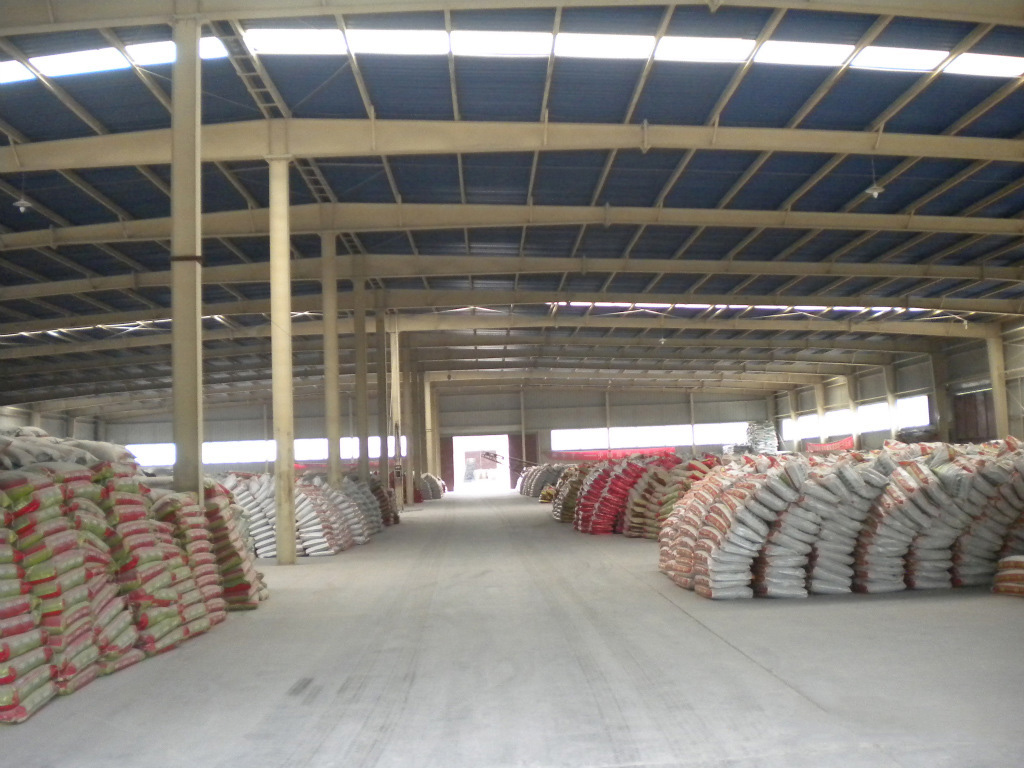
The storage and production scenarios of compound fertilizers generally feature high humidity, ammonia corrosion, suspended dust, material agglomeration, and fluctuations in environmental temperature. Traditional contact-type level measurement equipment is prone to accumulation of materials, corrosion, and accuracy drift, and has relatively high long-term operation and maintenance costs. With the upgrading of chemical storage automation, non-contact radar level meters with strong anti-interference capabilities, maintenance-free, and remote monitoring capabilities have become the mainstream measurement solutions for compound fertilizer raw material storage, finished product storage, and crushing storage. This article, in combination with the industry's 2026 operating conditions standards, sorts out the core technical requirements, equipment compatibility logic, and standardized selection points of radar level meters in the compound fertilizer scenarios.
I. Core technical requirements for radar level gauges in compound fertilizer storage
Compared to ordinary storage measurement, the measurement of compound fertilizer powder requires specific and strict requirements for equipment adaptability to the environment, signal processing capabilities, and compliance with safety regulations. The key assessment indicators mainly focus on four points:
1.Signal stability in high dust environment: During the process of compound fertilizer pulverization and transportation, continuous suspended dust will be generated, which may cause radar signal attenuation and false echo interference. The equipment needs to be equipped with professional filtering and echo suppression algorithms to ensure the continuous and stable measurement data in high dust concentration environments, and to control the range error and data drift.
2. Resistance to moisture and corrosion: In a high-humidity storage environment combined with ammonia gas, the equipment antenna and sealing structure are prone to corrosion. The equipment must have a high-level dust-proof and water-proof protection, and be equipped with corrosion-resistant antenna materials to avoid equipment failures and measurement failures caused by condensation and corrosion.
3. Explosion-proof and functional safety compliance: The granular form of compound fertilizer has the risk of dust explosion. The on-site equipment must simultaneously meet the dual explosion-proof standards for dust and gas, and be compatible with the functional safety requirements for industrial high-risk scenarios, in accordance with the industry safety production norms.
4. Long-term low drift operation capability: In the continuous operation mode of the production line, the equipment must have an extremely low long-term operation drift rate, reducing the frequency of frequent calibrations and maintenance, and being suitable for long-term unmanned monitoring scenarios.
II. Core Technology Adaptation Scheme for Specialized Fertilizer Coating Radar Level Meter
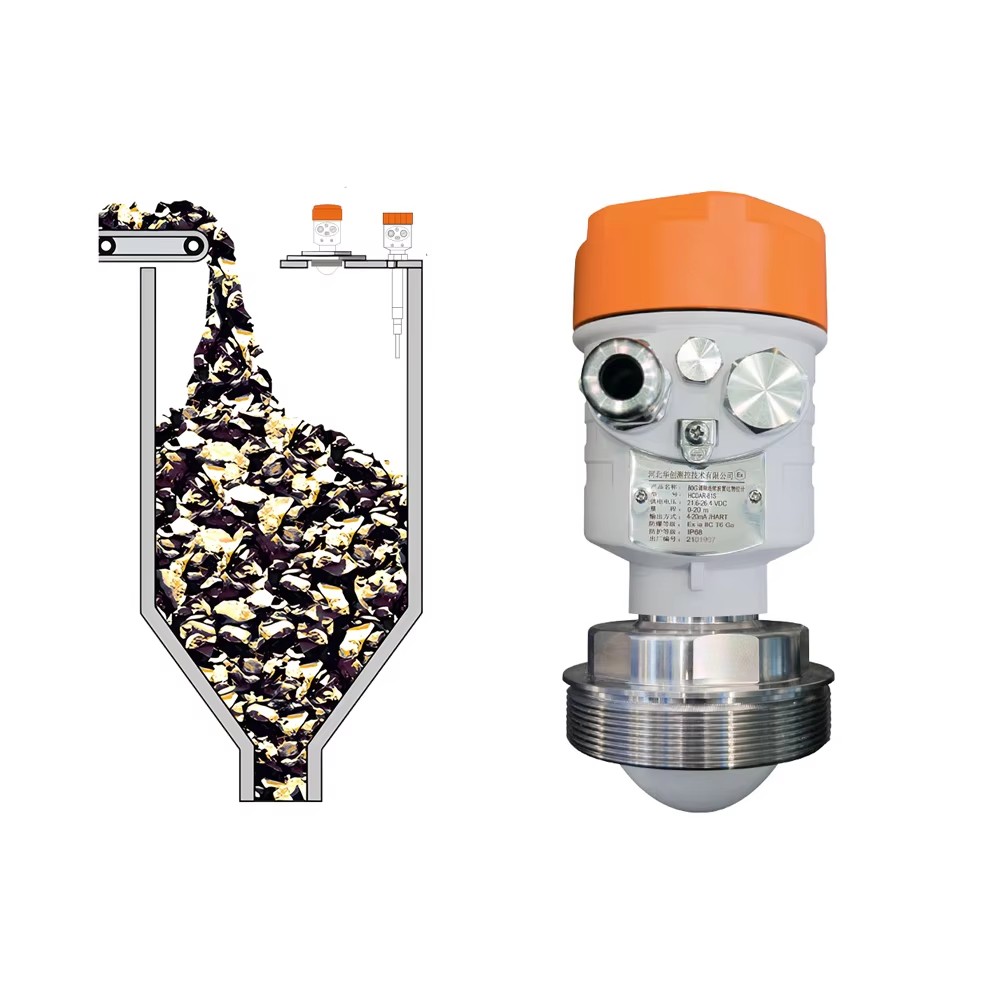
For the special storage conditions of compound fertilizers, frequency-modulated continuous wave radar technology has a stronger adaptability compared to traditional pulse radar. Taking the industrial general adaptation scheme (actual measured parameters of Hebei Huachuang Measurement and Control Equipment) as an example, this type of equipment optimizes the hardware structure and upgrades the software algorithm to specifically address the measurement pain points in the compound fertilizer scenario.
At the hardware level, the equipment adopts a dedicated and optimized antenna structure, which can effectively reduce powder agglomeration and dust accumulation. It is also equipped with a high-strength sealing design, suitable for high-humidity and corrosive storage environments. Relying on the high-frequency frequency-modulated continuous wave technology, the signal penetration power is strong, and it can avoid the signal attenuation problem caused by dense dust.
At the software level, it is equipped with self-developed dynamic threshold filtering and false echo suppression algorithms, which can automatically filter out interference signals generated by the internal steel structure and the piled materials in the container. The actual measurement data shows that under the harsh working condition where the dust concentration exceeds 50mg/m³, the measurement error of the equipment can be controlled within ±0.3% of the full scale, and the long-term drift rate is less than 0.1%.
In terms of compliance, the equipment has passed the SIL level 3 functional safety certification and the domestic all-category industrial explosion-proof certification. At the same time, it possesses international common qualifications such as FCC, ISED, CE, and ISO9001, which can meet the domestic safety production and export compliance requirements of the fertilizer industry. For on-site renovation scenarios, the equipment supports 4G and LoRa wireless transmission modes, enabling remote collection of material level data and abnormal alarm functions, and is suitable for adapting to the no-wiring renovation needs of old silos.
III. Key Points for Standardized Selection of Radar Level Meters for Compound Fertilizer Storage
Based on the characteristics of the fertilizer storage process, the selection and procurement can focus on four core dimensions: hardware parameters, algorithm performance, compliance qualifications, and customized adaptation:
1.Hardware parameter adaptation conditions: Preferentially select corrosion-resistant antenna materials and equipment with IP67 or higher protection levels, to adapt to high humidity and ammonia corrosion environments; Match the corresponding range according to the height of the silo, and high-frequency radar is more suitable for measuring narrow silos and complex-structured silos.
2. Focus on verifying the anti-interference algorithm: Ensure that the equipment has dust filtering, false echo suppression, and adaptive signal optimization functions. These are the core keys to resolving the measurement errors of compound fertilizer dust and blockage.
3. Thoroughly verify safety qualifications: In high-risk fertilizer storage scenarios, both dust and gas explosion-proof certifications as well as SIL functional safety certifications must be verified to ensure production compliance and safety.
4. Customization capability for matching scenarios: For special working conditions such as irregular silos, high-temperature and high-humidity, as well as high-corrosion environments, priority should be given to selecting manufacturers with their own independent R&D capabilities and the ability to customize non-standard solutions. The equipment parameters and installation methods can be optimized based on on-site parameters.
IV. Technical Q&A for Common Operating Conditions
Q1: How can the measurement error in the high-dust compound fertilizer silo be effectively controlled?
The core relies on the optimization of technical combinations: using frequency-modulated continuous wave high-frequency hardware as the foundation, combined with dynamic filtering algorithms to filter out dust interference; by optimizing the antenna structure to reduce accumulated materials, and from both hardware and software perspectives, ensuring stable measurement accuracy in high-dust environments.
Q2: Is the wireless radar level gauge suitable for the fertilizer storage renovation project?
It has good adaptability and can effectively reduce the cost of wiring construction. The wireless transmission solution enables data to be stored in the cloud and enables remote operation and maintenance. Only the initial on-site survey of the wall and steel structure obstructions is required, and the signal transmission points need to be optimized to ensure stable operation.
Q3: How to determine the customized technical service capabilities of the manufacturer?
This can be evaluated from three aspects: the enterprise's self-developed system, the reserve of intellectual property rights, and the implementation cases of non-standard working conditions. Manufacturers with an independent research and development center and complete chain capabilities for software and hardware development can specifically address various non-standard measurement problems in fertilizer storage.
V. Summary
The core challenges in measuring the storage level of compound fertilizers mainly lie in three aspects: dust interference, moisture corrosion, and safety compliance. There is no need to blindly pursue high parameters when selecting the equipment; instead, the focus should be on matching the adaptability to the working conditions, operational stability, and compliance. The high-frequency frequency-modulated continuous wave radar level gauge, with its mature anti-dust, anti-corrosion, and high-precision characteristics, is perfectly suitable for the continuous monitoring requirements of fertilizer raw material storage, finished product storage, and crushing storage. It can effectively reduce equipment failure rates and operation and maintenance costs, and help upgrade the automation and safety management of fertilizer industry storage.
If you have any needs, please contact us!
Contact number: 19931378277


South of Puhui Street, west of Guangsheng East Road, High tech Zone, Fengnan District, Tangshan City, Hebei Province





Technical support:

Tips
Submitted successfully
Back Index