SOLUTION
Radar level gauge HCDAR-81 Intelligent unmanned monitoring system for feed industry batching silo
Huachuang measurement and control Huachuang measurement and Control Technology Co., 2026-03-18 08:29
I. Application Scenarios
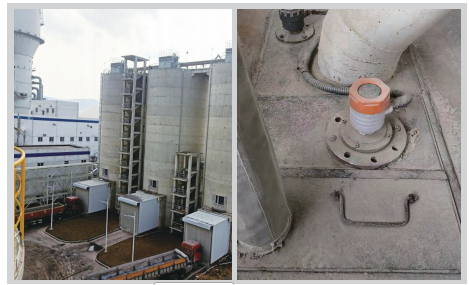
The feed industry covers various types of storage facilities such as silos, hoppers, batching tanks, and storage bins. Raw materials in powder or granular form, such as corn, wheat, soybean meal, rapeseed meal, cottonseed meal, middlings, bran, and rice bran, are stored in these facilities. Some storage bins also store mineral raw materials like limestone powder and calcium phosphate.
II. Core Challenges
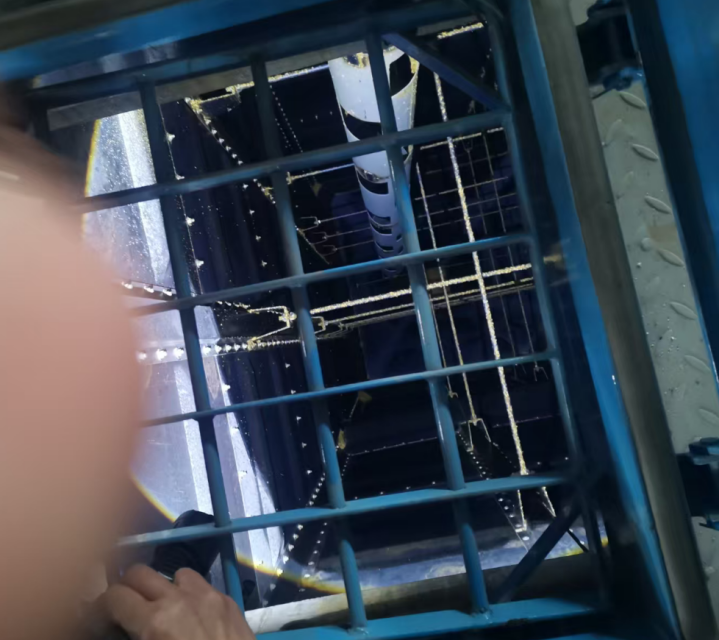
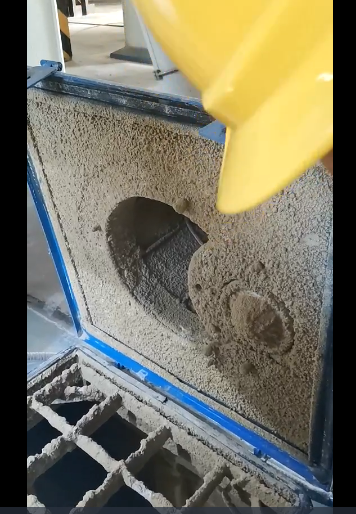
1. Dust Interference: Feedstock materials are mostly powders or fine particles, which tend to generate a large amount of dust during feeding and transportation. These dust particles significantly absorb and interfere with the measurement signals.
2. Steam and High Temperature: Some sections have high temperatures and steam, which will affect the measurement accuracy of certain types of sensors.
3. Complex Structure Inside the Silo: The ladders, supports, and other structures inside the silo can produce false echoes, interfering with the normal measurement of radar and other instruments.
4. Space and Installation Constraints: Especially in narrow silos, there are higher requirements for the installation position and beam angle of measurement instruments.
5. Diverse Material Characteristics: Feedstock materials are diverse, with different dielectric constants, densities, bulk densities, and fluidity, which pose challenges to the measurement principles that rely on material characteristics.
III. Scheme Architecture:
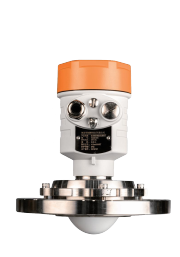
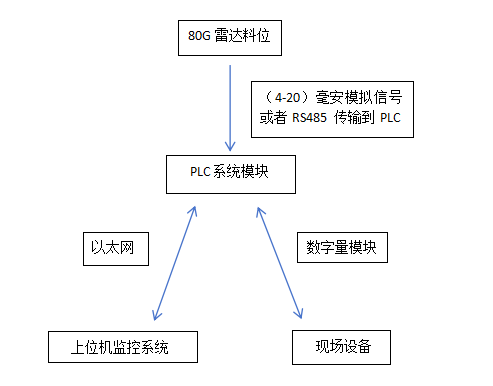
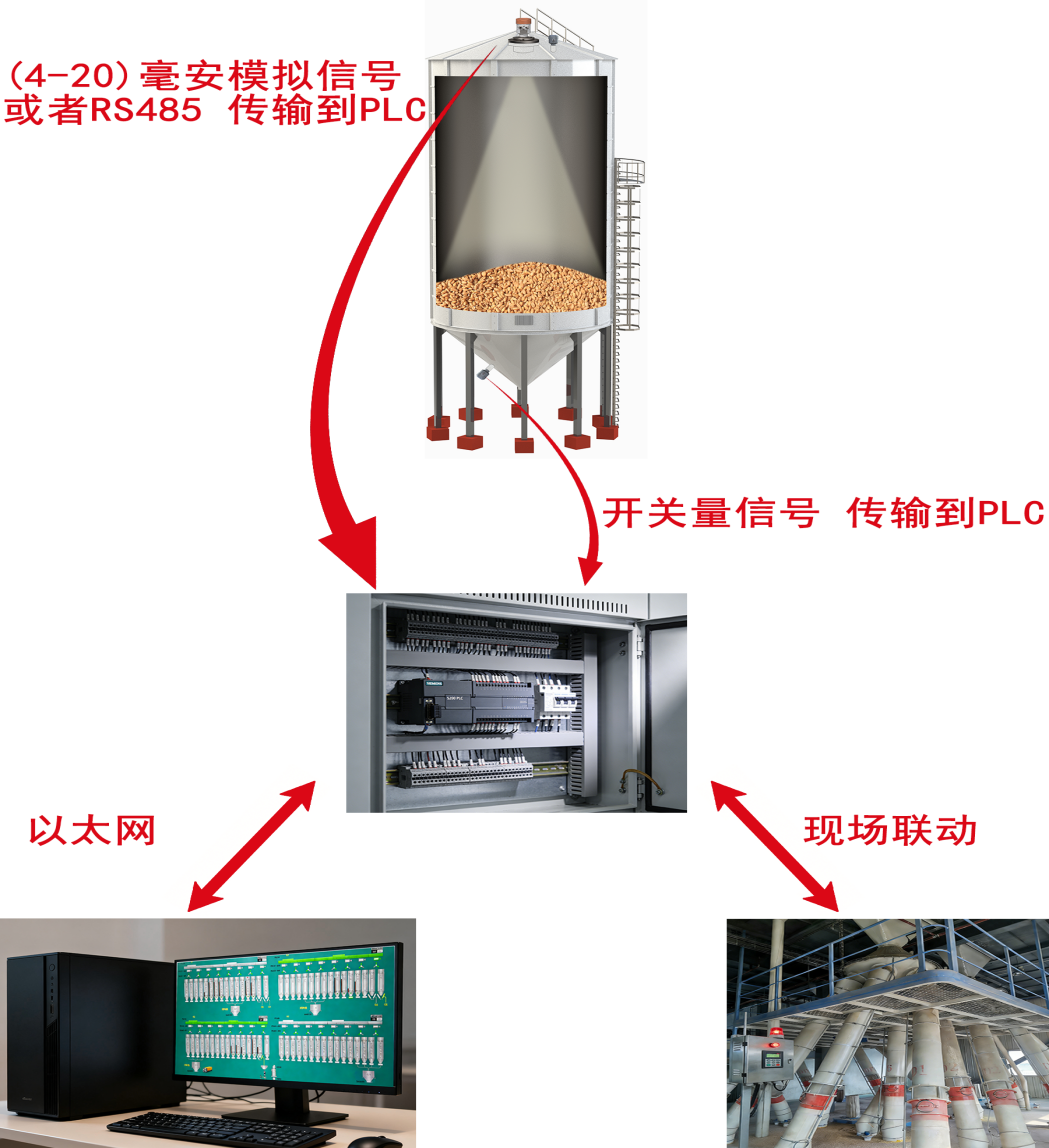
This scheme is centered on an 80G high-frequency radar level gauge, along with a PLC control system, an upper computer software and an alarm device. The specific composition is as follows:
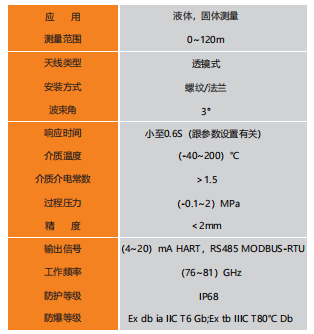
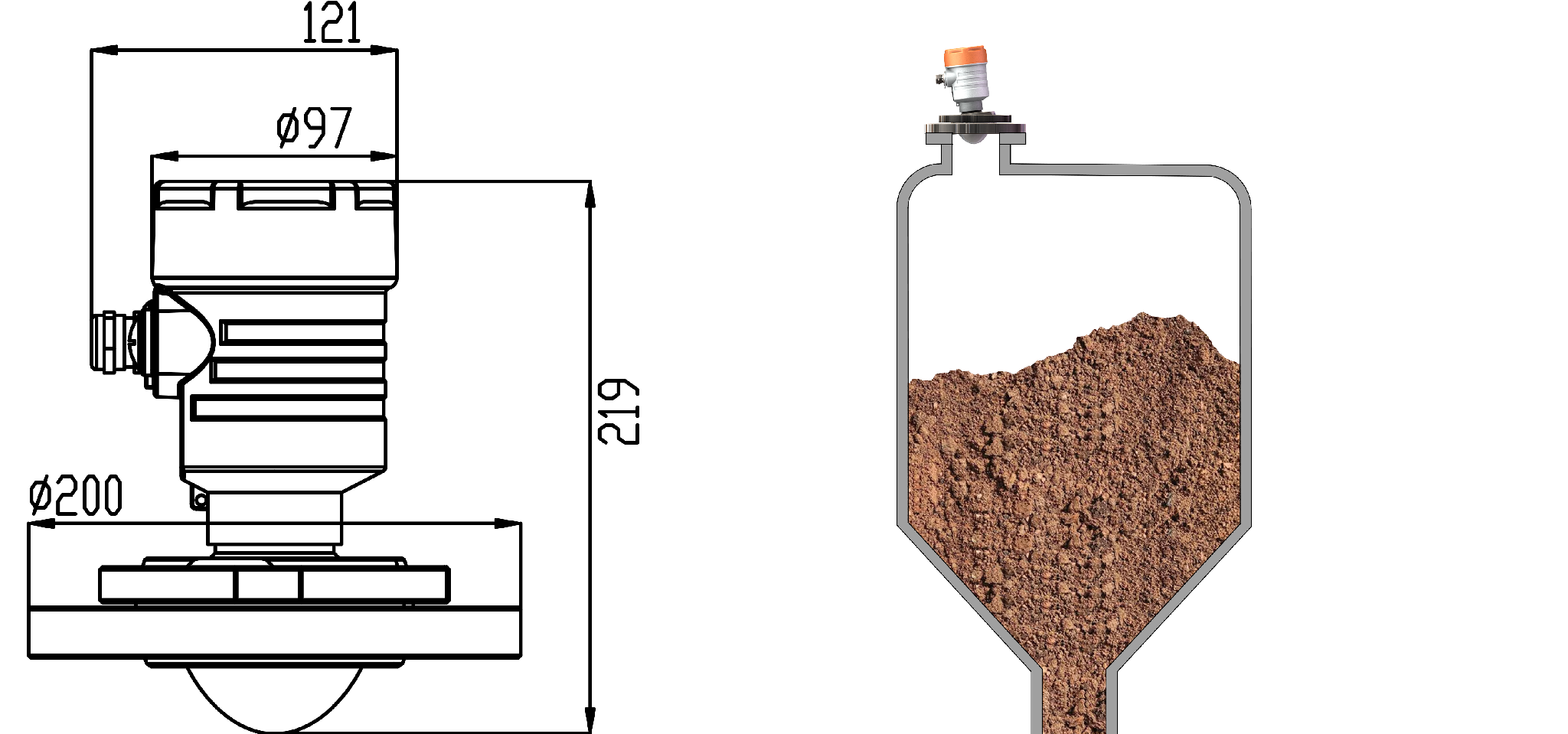
• 80G Radar Level Meter: Model HCDAR-81, measurement range 0 - 120m, accuracy ±1mm, resolution 1mm, operating temperature -40℃ - 200℃, protection class IP67, supports (4-20) mA / RS485 signal output;
• PLC control system: Utilizes the Siemens series, enabling data logic operations, threshold judgments, and output of control instructions;
• Host computer software: Custom-developed software that supports real-time data display, historical curve query, report generation, and remote access;
• Alarm device: It includes an audible and visual alarm system (installed in the control room) and a SMS alarm module. The alarm will be triggered when the liquid level exceeds the upper or lower limit (which can be customized).
topological graph
2. Work Process
⑴ Data Acquisition: The 80G radar level gauge collects real-time on-site data and transmits it to the PLC system via a 4-20mA signal or an RS485 signal.
⑵. Data processing: The PLC performs calculations on the level data and determines whether it exceeds the preset threshold (such as an upper limit of 90% and a lower limit of 10%). If it does exceed the threshold, an alarm will be triggered; and the equipment will be controlled to perform loading and unloading operations.
⑶. Data Display and Storage: The upper computer software receives the data transmitted by the PLC, and displays the material levels of each silo in real time on the large screen. At the same time, it stores historical data.
⑷. Data synchronization and application: Data can be transmitted to the cloud platform via the wireless transmission module, and the actual operation status of various production equipment can be viewed using wireless devices.
(5) Alarm Handling: In case of a special emergency, the sound and light alarm will activate, notifying the on-site personnel to evacuate immediately. The alarm response time should be no more than 10 seconds.
3. Advantages of Huachuang Measurement & Control's Enterprise Services
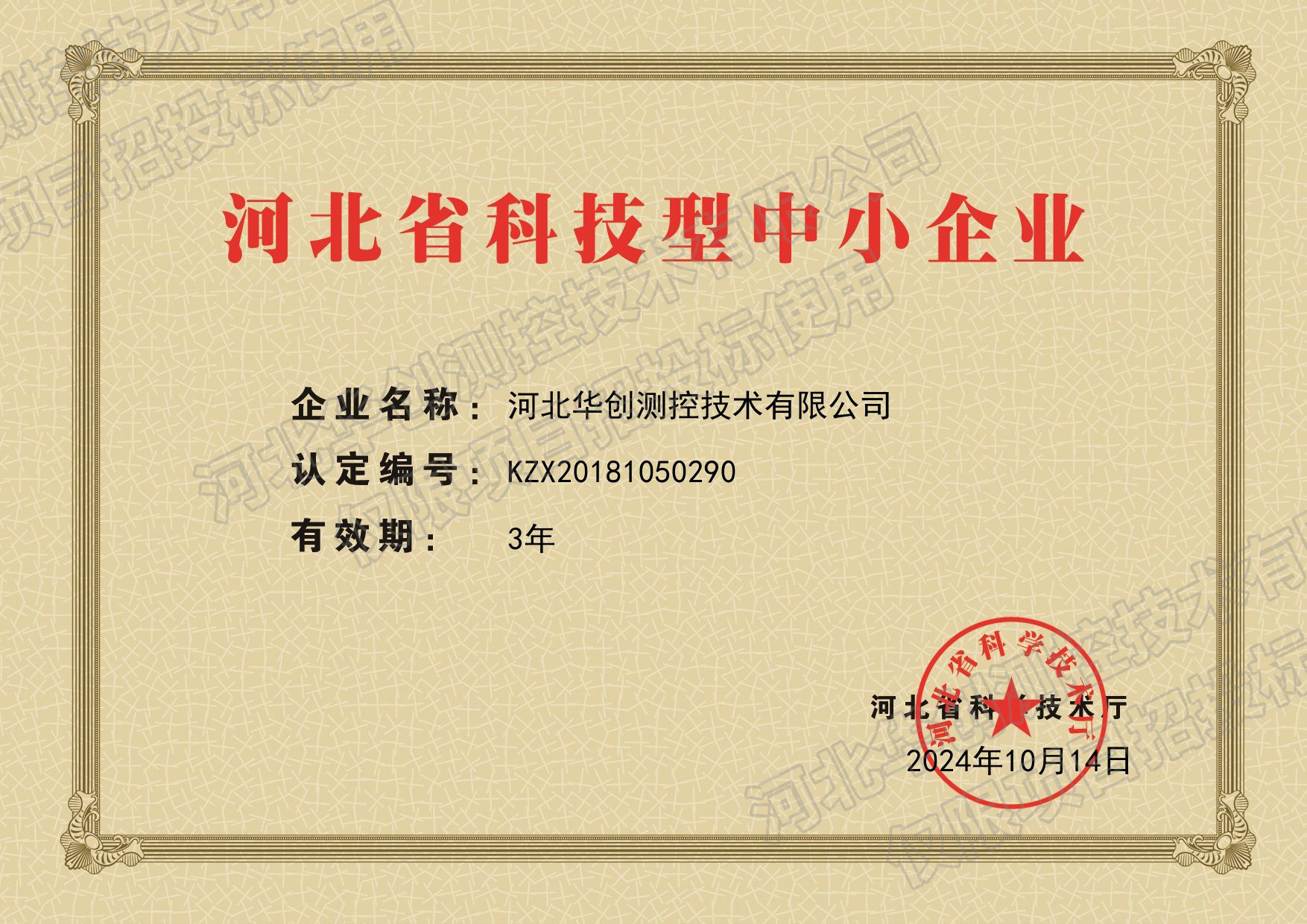
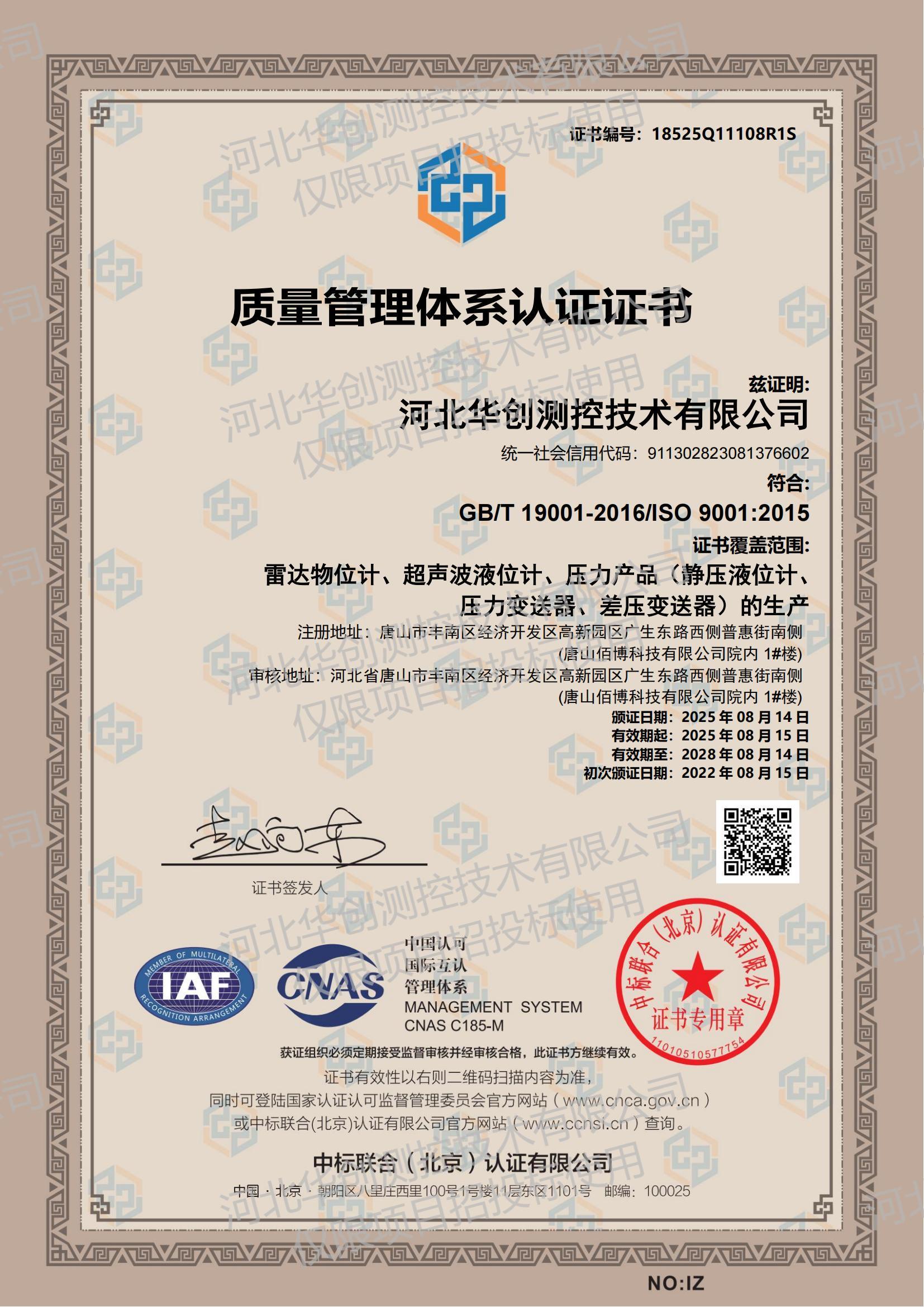
⑴. Strong R&D capabilities: We have established provincial-level radar level measurement and control R&D centers, enterprise technology centers, and industrial design centers. We have also collaborated with multiple universities such as Shenyang Aerospace University, North China University of Technology, Wuhan Institute of Technology, and Taiyuan University of Technology on multiple key technical research projects including signal amplification and filtering processing. We have independently developed several patents and are dedicated to providing our customers with stable, efficient, and reliable products and measurement control solutions.
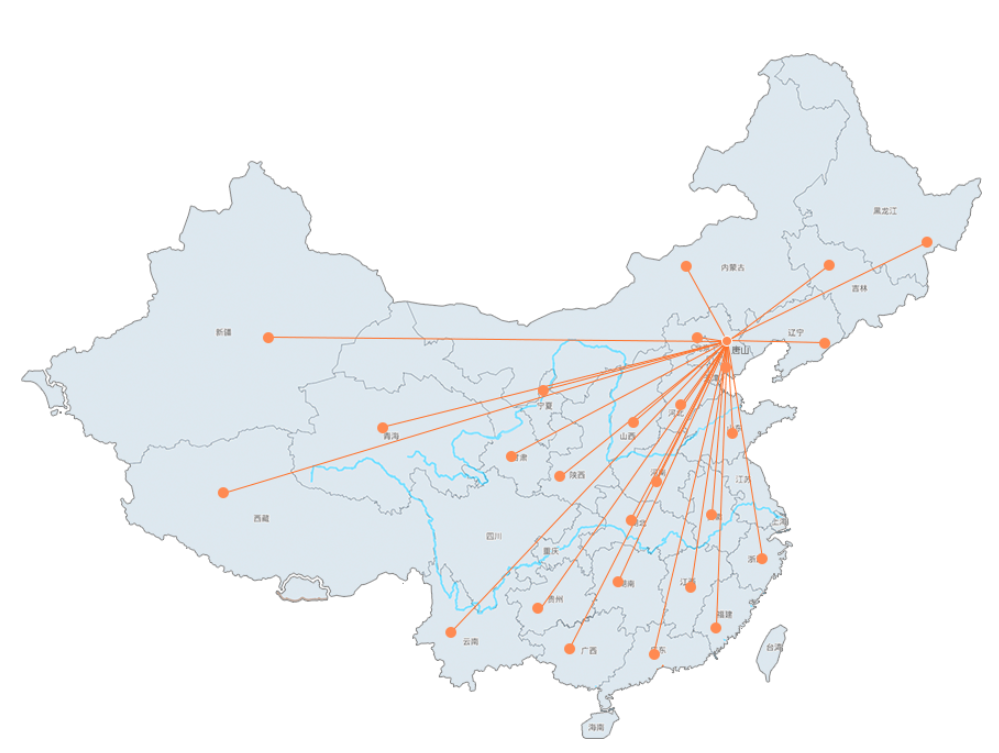
⑵. Extensive sales network: In China, Huachuang products are available in all 31 provinces and autonomous regions across the country. Internationally, the products are exported to 95 countries and regions around the world, including the United States, Russia, the United Kingdom, and Singapore. We have established partnerships with over 100 large and medium-sized enterprises in China, such as China Hydropower, China Resources Power, Moutai Group, Kuaishu Pharmaceutical, Datang International, Hejin Group, Panjiang Group, Baogang Group, Lu Xi Chemicals, Yanling Petroleum, Jidong Cement, and North China Pharmaceutical.
⑶. Perfect service system:
Pre-sales: Professional sales engineers will handle the requirements and provide professional solutions.
During the sales process: Customization as per requirements, strict quality control, convenient delivery, and system guidance materials provided upon factory delivery.
After-sales: Provide online and offline services as per project requirements, and promptly respond to complex on-site conditions.
4. Core value brought to customers
(1) Reduce material wastage and lower the direct raw material costs
Traditional level measurement relies on manual estimation or contact-type equipment, which is prone to data deviations, resulting in two core losses: one is overloading and spillage caused by incorrect level judgment, and the other is inventory deviation and hidden losses due to the "false grain" phenomenon. The radar level gauge adopts the frequency-modulated continuous wave (FMCW) technology, with a measurement error of ≤ 0.5%, and can accurately capture the actual height and volume of the material in the silo, completely eliminating the above problems. A case study of a large feed factory shows that after introducing the radar level gauge, the material loss caused by "false grain" each month decreased by over 30,000 yuan, and the annual savings in loss costs exceeded 360,000 yuan. At the same time, the equipment provides real-time threshold warnings, preventing overloading and spillage of raw materials. If the spillage of 0.5 tons of raw materials per single silo per single time is calculated at a market price of 400 yuan per ton, it can eliminate the spillage waste of 2-3 times per month, and the annual waste cost saved in each silo is 4,800-7,200 yuan. In addition, precise level data can avoid rework losses caused by insufficient ingredient addition, further reducing the raw material waste rate. Overall, the feed material loss rate can be reduced from the traditional 2.3% to 0.68%, significantly compressing the direct raw material cost.
(2) Replace manual inspections, reducing labor costs. Traditional silo management requires dedicated personnel to conduct multiple daily inspections of the silos and record the material levels. In large feed mills with more than 10 silos, usually 2-3 people work in shifts. Calculated based on the monthly salary of 4000 yuan for industrial inspection staff in second-tier cities, the annual labor cost can reach as high as 96,000 yuan. Radar level gauges can achieve 24-hour automated measurement, with data being uploaded in real time to PLC and the upper computer. Managers can remotely monitor the status of all silos through the central control system, eliminating the need for on-site. It can replace 90% of manual inspection work. Only one employee is retained to handle data monitoring and abnormal handling, resulting in a direct annual savings of 48,000 yuan in labor costs. At the same time, it avoids safety risks such as falling from heights and inhaling dust during manual inspection, and indirectly reduces potential losses from accidents. In addition, the equipment can complete data collection for a single silo within 3 minutes, and the inventory efficiency is more than 8 times higher than manual operation, significantly shortening the inventory cycle and reducing production delays caused by inventory sealing.
⑶. Ensure continuous production, increase production capacity and overall efficiency Traditional contact sensors (resistive rotation type, capacitive type) have a high failure rate in the high-dust and strong-vibration environment of the feed workshop. Frequent shutdowns for maintenance can easily lead to production disruptions. A single shutdown of 2 hours would result in labor losses and energy consumption of over 10,000 yuan for the equipment idling. Radar level meters have IP67 or higher protection levels, are highly resistant to dust, vibration, and electromagnetic interference, and can achieve long-term stable operation when paired with a signal isolator. Their failure rate is much lower than that of traditional equipment, effectively avoiding production stagnation caused by measurement equipment failures. At the same time, through linkage with the PLC system to achieve closed-loop control, automatic replenishment at low levels and automatic shutdown at high levels are triggered, avoiding ingredient interruption due to material shortage, significantly improving the continuity of the production process. After being applied to a certain production line, the downtime due to material shortage has been reduced from an average of 43 hours per year to 0 hours, and the production capacity has increased by 10%-15% compared to before, indirectly creating significant value-added income.
(4) Reducing equipment operation and maintenance costs and extending the service life of assets Contact-type level measurement equipment requires frequent disassembly, cleaning, calibration, and maintenance, resulting in high maintenance costs. For example, the annual maintenance cost of a heavy-weight level meter is approximately 20% of the original value of the equipment, and its service life is only 1-3 years. Radar level meters adopt a non-contact design, have no vulnerable components, and the probe is less likely to get clogged or worn. The maintenance cycle can be extended to 1-2 years, and only regular checks on the probe cleanliness are required. The annual maintenance cost is reduced by more than 70% compared to traditional equipment. At the same time, the equipment can prevent "full bin overload" or "empty bin dry grinding" in the storage bin, reduce bin deformation, discharge valve blockage, and fan dry grinding, etc., and extend the service life of the storage bin, discharge valve, and fan, etc. After being applied in a feed factory, the frequency of discharge valve blockage decreased from 6 times per year to 1 time, and the fan replacement cycle was extended from 2 years to 3 years. In one year, the equipment maintenance and replacement costs were saved by approximately 15,000 yuan. In the long run, the 5-10-year service life of the equipment can further spread the initial purchase cost and improve the asset return rate.
(5) Optimize inventory management and reduce capital occupation costs
When precise material level data is lacking, feed mills often over-purchase raw materials to avoid material shortages, resulting in inventory accumulation and occupying a large amount of funds and storage space. The real-time and precise material level data provided by radar level meters can assist enterprises in formulating scientific purchasing plans and controlling inventory within a reasonable range. Taking additives such as titanium dioxide as an example, when no level meter was installed, the inventory usually remained at 30 tons. Calculated at a price of 1.5万元 per ton and an annual loan interest rate of 4%, the annual capital occupation cost was approximately 1.8万元. After installing the level meter, the inventory dropped to 15 tons, reducing the capital accumulation by 22.5万元, and saving 0.9万元 in annual capital occupation costs. At the same time, precise inventory data can avoid waste caused by the long-term storage of raw materials and reduce storage turnover costs, further improving the efficiency of capital utilization.
In conclusion, the economic benefits brought by radar level gauges to feed mills cover both direct costs and indirect revenues. Small and medium-sized feed mills can save up to 50,000 to 100,000 yuan per year, while large enterprises can even save tens of thousands of yuan. Not only can it quickly recover the initial purchase investment, but it can also, through long-term lean management, build cost advantages for feed mills and enhance core profitability.
If you have any requirements, please contact us!
Contact Number: 400-851-0898


South of Puhui Street, west of Guangsheng East Road, High tech Zone, Fengnan District, Tangshan City, Hebei Province





Technical support:

Tips
Submitted successfully
Back Index