SOLUTION
How to Achieve Stable Level Measurement in High-Temperature, High-Humidity Steam Vessels in Steel Plants? 80GHz Radar Level Transmitter Quartz High-Temperature Window and Waveguide Anti-Steam Solution
Huachuang measurement and control Huachuang measurement and Control Technology Co., 2026-11-19 09:08
In metallurgical steelmaking, industrial waste heat recovery, continuous casting energy generation systems, and heavy chemical processing facilities, high-temperature steam vessels, spherical accumulators, and deaerator tanks serve as mission-critical thermal process equipment for storing high-pressure steam, balancing steam header pressures, and maintaining thermal fluid cycles. However, in hostile steelmaking process environments, conventional contacting level instruments (such as mechanical float switches, magnetic level gauges), differential pressure transmitters, and standard non-contact sensors frequently experience severe measurement distortion, false level readings from condensation, premature seal degradation, signal loss, and catastrophic electronic burnout. First, the interior of steam vessels and thermal spherical tanks operates continuously under severe conditions of elevated temperatures, high static pressures, and 100% saturated steam atmospheres with violent thermodynamic convection. When conventional microwave radar signals propagate through dense steam plumes, the high concentration of water vapor molecules and suspended micro-droplets causes substantial electromagnetic scattering and dielectric attenuation, drastically degrading the echo signal-to-noise ratio (SNR) and triggering false echo tracking or complete loss of echo. Simultaneously, rapid condensation creates continuous dripping and thick liquid film formation on the vessel top and mounting nozzles; direct exposure of radar antennas to these drops causes strong near-field ringing echoes that completely mask the true liquid surface reflection peak. Second, intense thermal radiation imposes severe stress on instrument physical seals and electrical circuits. Standard industrial polymers such as PTFE or elastomeric O-rings degrade rapidly, harden, shrink, and deform under sustained baking, introducing dangerous high-pressure steam leaks and process containment breaches, while ordinary signal cables suffer thermal degradation and insulation breakdown. Furthermore, ambient metallurgical airborne iron oxide dust and intense mechanical vibrations further accelerate sensor failure unless specialized physical isolation and energy-guiding structures are engineered into the instrumentation.
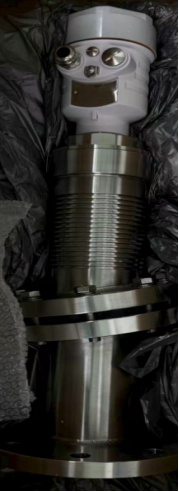
To eliminate severe process risks—such as water carryover into steam turbines, dry boiling, overpressure rupture, and unplanned plant outages—metallurgical instrumentation and automation engineering teams must transcend passive maintenance routines and low-accuracy instruments. Instead, modern industrial plants must adopt non-contact microwave radar technology engineered with high-frequency vapor penetration, physical-grade high-temperature pressure seals, and waveguiding containment structures. During initial engineering evaluations, plant project teams must systematically analyze critical process boundaries: including maximum operating temperature, peak design pressure, steam saturation dynamics, vessel geometry and nozzle dimensions, ambient radiant thermal flux, and automated DCS/PLC communication interfaces. Integrating 80GHz high-frequency Frequency Modulated Continuous Wave (FMCW) radar algorithms, optical-grade quartz glass high-temperature isolation windows, spiral-wound graphite gaskets, smooth-bore waveguiding stilling pipes, and heat-resistant thermal signal cables provides the definitive, leak-proof, zero-maintenance engineering solution for continuous level measurement in metallurgical steam vessels.
To conquer the hostile industrial challenges found in steel plant steam vessels, high-temperature spherical tanks, autoclaves, and thermal process silos, HCCK has engineered the HCDAR-82 Series High-Temperature 80GHz FMCW Radar Level Transmitter. This instrument introduces specialized electromagnetic sensing and robust physical isolation architectures tailored for extreme thermal and high-humidity environments. Operating on an advanced 80GHz millimeter-wave Frequency Modulated Continuous Wave (FMCW) platform with broad frequency modulation bandwidth, the HCDAR-82 generates an exceptionally concentrated microwave beam. Because high-frequency 80GHz millimeter waves exhibit short wavelengths and remarkable dielectric penetration through water vapor, the transmitted microwave energy slices directly through turbulent steam clouds, airborne dust particulates, and thermal density gradients with minimal signal loss. The high-speed digital signal processor executes real-time Fast Fourier Transform (FFT) spectral analysis on the beat frequency signal, locking onto the true liquid interface echo with millimeter-grade accuracy while remaining completely unaffected by ambient precipitation, dust clouds, ambient illumination, or internal convective turbulence.
To address the extreme thermal radiation, corrosive condensates, and high-pressure sealing challenges of metallurgical steam vessels, the HCCK HCDAR-82 High-Temperature Radar incorporates an innovative hybrid physical barrier featuring a Quartz Glass High-Temperature Window coupled with a Metal Spiral-Wound Graphite Gasket. This heavy-duty assembly replaces vulnerable standard elastomeric and plastic seals: the optical-grade quartz glass window provides high microwave transmission efficiency while establishing a physical barrier capable of withstanding extreme temperatures and pressure shocks, isolating the high-temperature vessel environment from the radar antenna and sensitive electronics; concurrently, the metal spiral-wound graphite gasket delivers resilient, high-integrity compressive sealing under continuous thermal expansion cycles, eliminating high-pressure steam leakage risks. To completely eliminate signal scattering caused by intense steam turbulence and liquid droplet condensation within spherical tanks, the measurement system utilizes a Smooth-Bore Waveguide (Stilling Well) mounting configuration—the 80GHz radar mounts atop the waveguide pipe, confining 100% of the microwave energy within the smooth internal bore. This waveguide configuration completely shields the microwave beam path from steam cross-currents, liquid sloshing, and dripping condensates, ensuring a pristine echo profile with maximum signal-to-noise ratio; additionally, the electrical cabling incorporates heavy-duty heat-resistant insulated signal wires to prevent radiant thermal damage to the transmission loop. For process automation, the HCDAR-82 supports industrial two-wire 4–20 mA (with HART protocol) and four-wire RS485 MODBUS-RTU digital communications, seamlessly streaming continuous level metrics and alarm thresholds directly to plant DCS architectures, PLC panels, and the HCCK Industrial IoT Cloud Platform.
When deploying the HCCK HCDAR-82 High-Temperature 80GHz Radar Level Transmitter across metallurgical steam vessels and thermal process vessels, rigorous adherence to mechanical mounting specifications and electrical guidelines is vital for long-term operational success. Mechanically, the smooth-bore metallic waveguide must be mounted vertically on the vessel top nozzle, constructed from corrosion-resistant, high-temperature stainless steel alloys. The inner bore of the waveguide must be polished, smooth, and free from internal weld beads, burrs, or physical obstructions to prevent parasitic microwave reflections; a small pressure-equalization vent hole must be machined near the top of the waveguide to guarantee liquid level equilibrium between the pipe interior and the vessel volume. When mating the radar flange to the waveguide nozzle, the quartz glass window and spiral-wound graphite gasket must be aligned concentrically, with flange bolts torqued in a cross-pattern sequence to ensure uniform compressive sealing. The installation location must be chosen away from high-velocity steam inlet nozzles and boiler feedwater return ports to prevent severe dynamic fluid impact. Electrically, heat-resistant signal cables should be protected within flexible metallic conduits and routed away from uninsulated steam lines; in extreme ambient thermal environments, installing protective sun/heat shields or specifying optional external air-purging/cooling jackets ensures internal electronics operate within rated temperature boundaries.
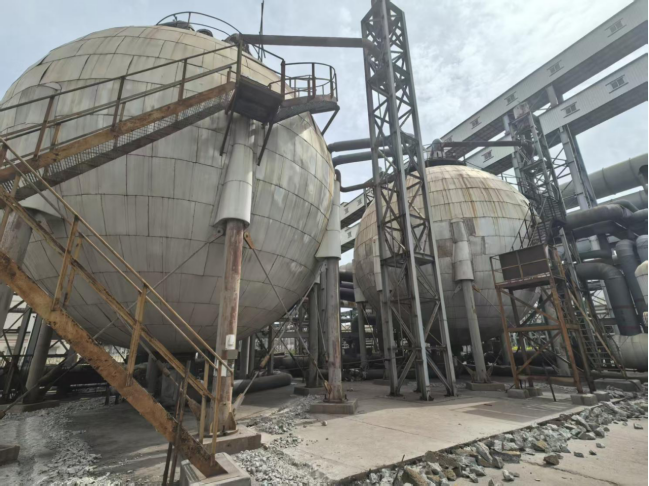
During software commissioning, technicians configure baseline vessel parameters via the local display pushbuttons or handheld communicators, including empty-distance datum zero, upper measuring span, waveguide inner diameter compensation, and process damping response filters, while activating intelligent false-echo mapping to automatically suppress fixed reflections from nozzle flanges and weld joints. When consulting with HCCK application specialists for tailored steam vessel and high-temperature level measurement solutions, industrial operators should provide the following baseline operational data:
Vessel geometry and mechanical dimensions: Vessel configuration (vertical cylinder, horizontal vessel, spherical tank, or deaerator), total vessel height, internal diameter, nozzle standoff height, and flange size;
Process thermodynamic parameters: Process medium composition, normal and maximum operating temperatures, operating pressure envelope, steam saturation level, and thermal cycling frequency;
Environmental conditions and safety ratings: Ambient thermal radiation levels, steam condensation severity, presence of internal boiling or agitation, and required hazardous area explosion-proof certifications;
Control system and electrical interfaces: Desired electrical output format (4–20 mA/HART, RS485 MODBUS-RTU, or industrial Ethernet), supply voltage, and automated safety interlocking requirements. HCCK’s senior instrumentation specialists will leverage these operational criteria to deliver customized quartz window assemblies, optimized waveguide designs, heat-resistant wiring packages, and turnkey commissioning support.
For professional support, visit our Website at www.hhcck.cn/, contact our team via WhatsApp: +86 150 2761 6330, or Email: sales@hhcck.com.


South of Puhui Street, west of Guangsheng East Road, High tech Zone, Fengnan District, Tangshan City, Hebei Province





Technical support:

Tips
Submitted successfully
Back Index