NEWS CENTER
How to Select an Ultrasonic Level Transmitter for Liquid Tanks: HCUS-300, HCUS-400 and HCUS-500 Compared
Huachuang measurement and control Huachuang measurement and Control Technology Co., Ltd 2026-09-22 14:57
When selecting an ultrasonic level transmitter for a liquid tank, process vessel, water-treatment basin or chemical container, measuring range is only one part of the decision. Ultrasonic level measurement sends an acoustic pulse above 20 kHz toward the surface and receives the reflected echo. The round-trip time, together with the sound velocity, is used to calculate distance. Surface movement, foam, vapour, agitation, filling impact, tank walls and internal supports can all affect the usable echo. The selection therefore needs to consider the medium, tank geometry, process pressure, installation position and control-system interface together.
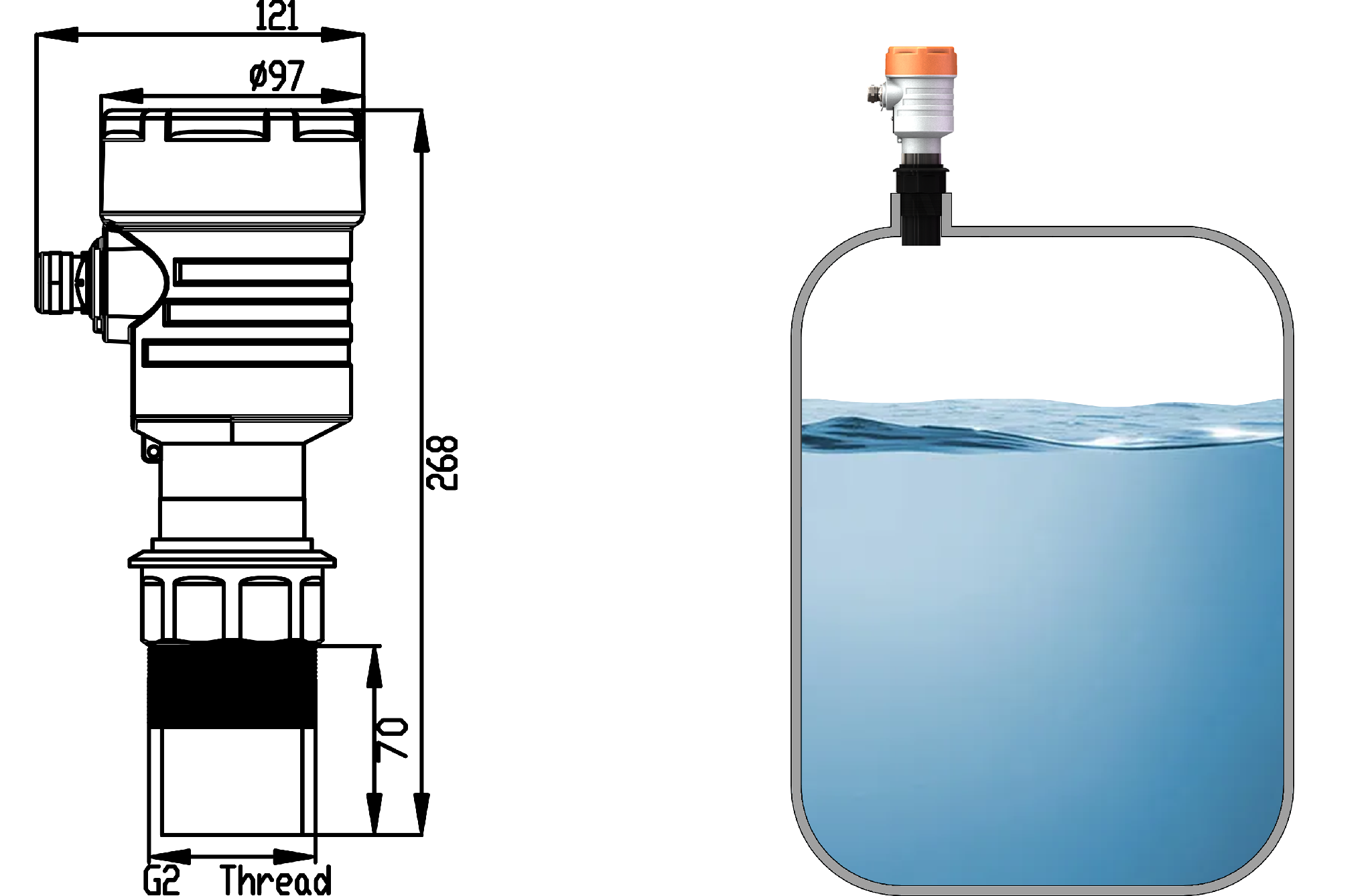
First define whether the application involves clean water, a general process liquid or slurry; whether the maximum distance approaches 20 m; whether the tank roof is flat, domed or crowded with nozzles and stiffeners; whether foam, strong agitation or filling impact is present; whether the system requires 4–20 mA, HART, RS485 Modbus or relay output; and whether the installation area requires an explosion-proof instrument. On a domed tank, the probe should not simply be placed at the roof centre. The beam path must be considered together with the roof shape, wall clearance and internal structures so that fixed-structure echoes are not interpreted as the liquid surface.
HCUS-300 is intended for liquid measurement. It has a 0–20 m measuring range, threaded or plastic-flange process connections, a process-pressure limit of ≤0.3 MPa, accuracy of 0.5%–1.0%, IP67 protection for the display meter and IP68 protection for the probe. It provides 4–20 mA with HART and RS485 MODBUS-RTU interfaces. For liquid tanks requiring a longer measurement distance together with analog and digital communication, HCUS-300 can be a primary model for evaluation. The final choice still needs to match the liquid condition, tank structure and control system.
HCUS-400 is intended for liquid measurement. It has a 0–20 m range, threaded or plastic-flange process connections, a process-pressure limit of ≤0.3 MPa, accuracy of 0.5%–1.0%, IP67 display-meter protection and IP68 probe protection. Its signal options include 4–20 mA, RS485 Modbus and relay output. Its installation should be checked against the domed-tank roof position, wall clearance and internal structures. For ordinary liquid tanks requiring level display, alarms or relay control, HCUS-400 should be evaluated together with the mounting position and output combination.
HCUS-500 is intended for liquid and solid measurement. It has a 0–20 m measuring range, threaded or plastic-flange process connections, a process-pressure limit of ≤0.3 MPa, accuracy of 0.5%–1.0%, IP67 display-meter protection and IP68 probe protection. Its signal options include 4–20 mA, RS485 Modbus and relay output. It provides Ex d IIC T6 Gb and Ex ib IIB T6 Gb explosion-proof grades. When an ultrasonic level instrument is required in a relevant hazardous area, the hazardous-area classification, equipment protection level, power supply, process connection and project certification requirements must be checked one by one. The word “explosion-proof” alone is not enough for final ordering.
If the project focuses on continuous liquid-tank measurement, a distance close to 20 m and HART or RS485 communication, HCUS-300 should be checked first against the interface and installation conditions. If the project is a standard liquid-tank application requiring relay alarms or several output options, HCUS-400 should be evaluated. If the installation is in a hazardous area that requires the corresponding protection level, the Ex d IIC T6 Gb and Ex ib IIB T6 Gb information of HCUS-500 must be compared with the site classification and project requirements. Common checks for all three models include the 0–20 m range, ≤0.3 MPa process-pressure limit, 0.5%–1.0% accuracy, IP68 probe boundary, blind-zone allowance, acoustic path and surface disturbance.
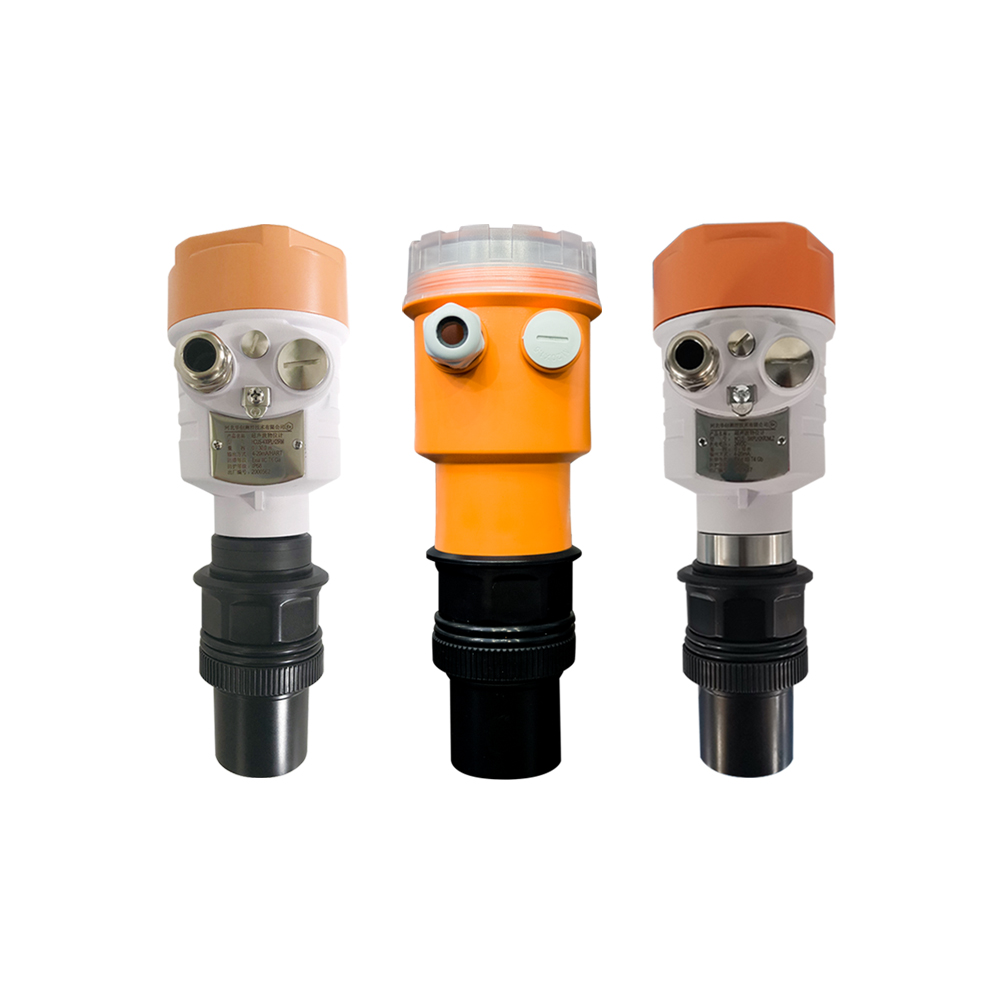
During commissioning, observe echo stability at low, medium and high levels, and record signal changes during filling, discharge, agitation or foam variation. If the reading becomes fixed, jumps or is lost, first check the probe angle, internal obstructions, power and wiring, output configuration and surface condition before adjusting parameters or changing the measurement technology. After receiving the medium name, liquid or slurry condition, tank height, maximum and minimum levels, temperature and pressure, roof structure, hazardous-area classification, process connection and control-system requirements, HCCK can further determine the appropriate configuration of HCUS-300, HCUS-400 or HCUS-500.
For professional support, visit our Website at www.hhcck.cn/, contact our team via WhatsApp: +86 195 3225 4537, or Email: sales@hhcck.com.


South of Puhui Street, west of Guangsheng East Road, High tech Zone, Fengnan District, Tangshan City, Hebei Province





Technical support:

Tips
Submitted successfully
Back Index