NEWS CENTER
How to Deal with Abnormal Readings on Radar Level Transmitters: A Seven-Step Field Diagnosis Guide
Huachuang measurement and control Huachuang measurement and Control Technology Co., Ltd 2026-11-17 17:52
When a radar level transmitter shows no level reading or jumping values, do not conclude immediately that the instrument has failed. In most cases the root cause lies in power supply, wiring, parameter settings, installation position, medium conditions, echo signals, antenna fouling or the control system. Radar level transmitters are widely used in storage tanks, water pools, acid and alkali tanks, oil tanks, chemical vessels, sewage ponds and reactors. Since medium properties, tank structure and installation conditions vary greatly between sites, any weakness in selection, installation or commissioning will eventually surface as abnormal data.
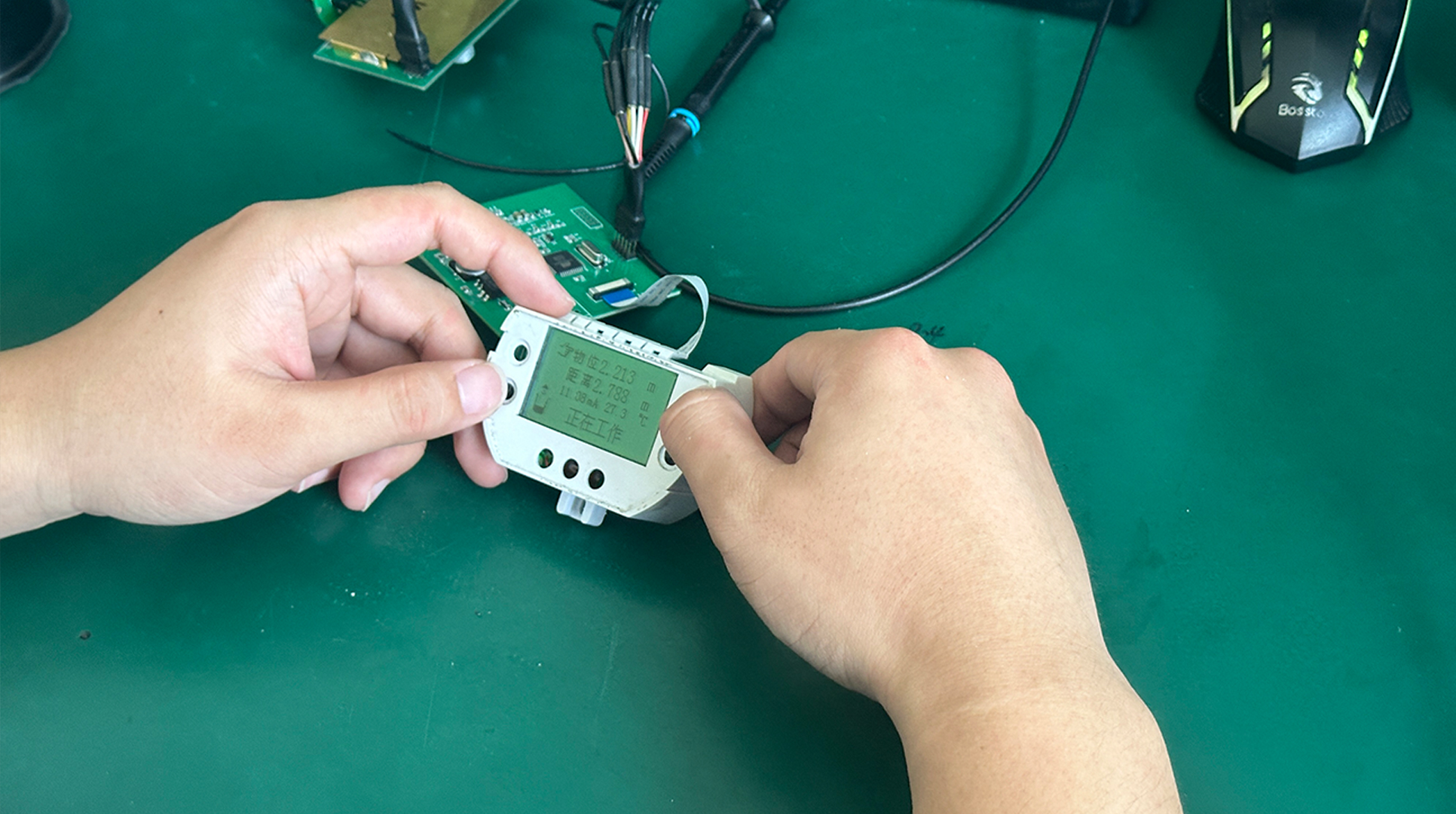
Prevention starts before the instrument is ordered. Confirm the working conditions first: medium type and dielectric constant, temperature and pressure, and whether foam, steam, agitation, corrosion, crystallization, wall buildup or surface fluctuation exist. These basics determine echo strength, and complex conditions must be reviewed with the manufacturer's technical team rather than judged by range and connection alone. For installation, choose a position with stable surface reflection and a clear radar path, avoiding the area directly above the inlet, the vicinity of agitators, positions too close to the tank wall, and zones crowded with coils or brackets. Otherwise the radar may lock onto interference echoes from the wall or internal structures, causing jumping or loss of signal. During commissioning, set parameters according to the actual tank height, range, blind zone, output mode and filling rate, and never copy settings from another site or rely on factory defaults. After startup, clean the antenna and mounting nozzle periodically, since condensation, crystallization and material buildup weaken the signal, and most false alarms disappear after cleaning.
For a missing level reading, follow a fixed sequence. First check the power supply: confirm the instrument is powered, voltage is within specification and terminals are tight. If the display is completely dark, inspect the power circuit, module and fuse before removing the instrument. Second, measure the 4-20mA output. When the local display works but the PLC or DCS shows nothing, the fault is in the signal loop, so check isolators, safety barriers, input modules and cables. Third, verify parameters including tank height, range, empty and full distance, blind zone, output mode and alarm settings. Fourth, recheck the installation position for inlet, agitator, coil or wall interference, and consider a universal flange for angle adjustment or a new mounting point. Fifth, inspect the antenna for condensation, buildup, crystallization or corrosion, and clean it before re-testing. Sixth, read the echo curve to judge the position and amplitude of the real surface echo and identify false or weak reflections. Seventh, contact the manufacturer's technical team with medium name, tank height, installation photos, site conditions, instrument parameters, fault symptoms and the echo curve, since complete information shortens diagnosis significantly.

Abnormal radar level readings usually trace back to eight causes: power failure, wiring errors, improper parameters, installation interference, weak medium reflection, antenna fouling, false echoes and control system faults. For chemical, environmental protection, water treatment, power, metallurgy, building material, food and pharmaceutical industries, long-term stability depends not on a single instrument but on closed-loop management covering selection, installation, commissioning and maintenance. Keeping an instrument file with model, mounting position, medium, parameters, fault symptoms and corrective actions allows experience to be reused quickly when similar conditions recur.
For professional support, visit our Website at http://www.hhcck.cn/ , contact our team via WhatsApp: +86 150 2761 6330, or Email: sales@hhcck.com.


South of Puhui Street, west of Guangsheng East Road, High tech Zone, Fengnan District, Tangshan City, Hebei Province





Technical support:

Tips
Submitted successfully
Back Index